Discretion as a Business Asset: Why Sensitive Deals Demand a Professional Chauffeur Service

In the world of high-stakes corporate transactions, mergers, acquisitions, and confidential negotiations, executives invest considerable resources in legal counsel, secure communications platforms, and non-disclosure agreements. Yet one vulnerability is routinely overlooked: the journey between meetings.
The vehicle you travel in — and who drives it — can either fortify or compromise the privacy your business depends upon. For executives navigating sensitive deals, a professional chauffeur service is not a luxury amenity. It is a measurable business asset.
The Vulnerability Hidden in Plain Sight
Consider the typical alternatives to a professional chauffeur. Rideshare platforms, while convenient, present meaningful confidentiality risks. Drivers are independent contractors with no formal vetting for discretion. Conversations held in the backseat of a rideshare vehicle are not protected by any professional obligation. The driver may recognize a passenger, overhear a negotiation strategy, or simply retain information that was never intended to leave the vehicle.
Self-driving is no safer. An executive navigating traffic while mentally rehearsing deal terms, taking calls on speaker, or reviewing confidential documents on a tablet is neither secure nor fully present. Distraction compounds vulnerability.
The professional chauffeur model eliminates both concerns in a single engagement.
What Professional Discretion Actually Looks Like
Discretion in a professional chauffeur context is not merely a matter of keeping quiet. It is a cultivated professional standard built into every aspect of the service.
At CapStar Chauffeurs, our drivers are trained to treat every engagement as confidential by default. That means no unsolicited conversation, no acknowledgment of passenger identity in public settings, no discussion of client itineraries with third parties, and no retention of information shared during transit. The vehicle becomes an extension of the boardroom — a private, controlled environment where executives can think, communicate, and prepare without reservation.
This professional ethic is reinforced through formal vetting, background screening, and ongoing standards of conduct that rideshare platforms simply do not require of their drivers.
The Strategic Value of a Controlled Environment
Sensitive deals rarely happen in a single room. They unfold across multiple touchpoints — preliminary meetings, due diligence sessions, negotiating dinners, early-morning calls before the opposing counsel arrives. The time spent in transit between these moments is not downtime. It is active deal time.
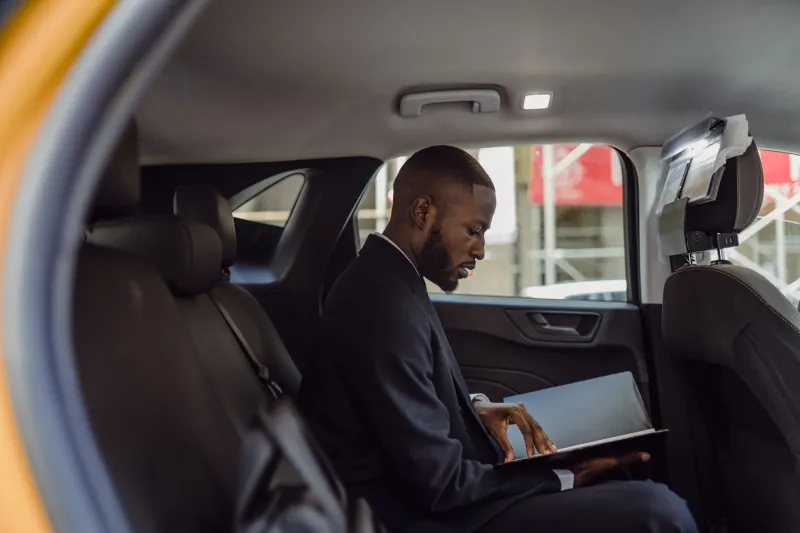
Executives who travel with a trusted chauffeur can use that time without restriction. A general counsel can review draft agreements. A CEO can debrief with an advisor after a difficult session. A dealmaker can make a critical call to a silent partner without concern for who is listening.
This freedom to operate openly within the vehicle — without filtering conversation or concealing documents — is a genuine competitive advantage. It extends the productive, secure environment of the private office into every mile of the day.
Discretion Extends Beyond the Conversation
Confidentiality in ground transportation is not limited to what is said inside the vehicle. It also encompasses what is observed outside of it.
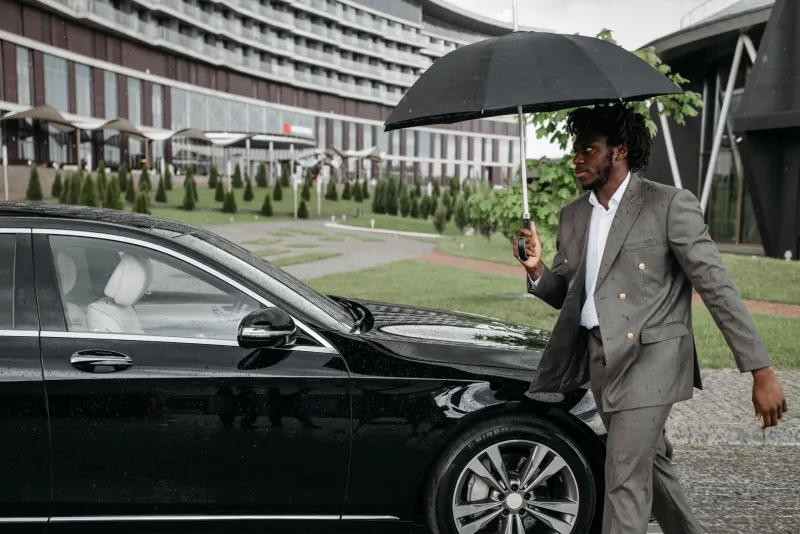
When a chauffeur arrives at a law firm, a private equity office, or a hotel hosting a confidential summit, the manner of arrival matters. A professional chauffeur service understands how to position the vehicle, manage timing, and conduct the engagement in a way that does not draw unnecessary attention to a client's presence or destination.
In transactions where the mere knowledge that two parties are meeting could move markets or alert competitors, this level of operational discretion is not incidental — it is essential.
CapStar Chauffeurs operates with an acute awareness of the environments our clients navigate. Our chauffeurs understand that who you are seen with, where you are seen, and when you arrive are all information that belongs exclusively to you.
Protecting More Than Conversations: Data and Document Security
Modern executives travel with sensitive materials — laptops, tablets, printed documents, and mobile devices containing privileged communications. The vehicle environment must support, not threaten, the security of those materials.
Professional chauffeur services provide a stable, private setting where documents can be reviewed and stored without the concern of a stranger's proximity. There are no other passengers. There is no shared space. The vehicle is, for the duration of the engagement, exclusively yours.
This stands in contrast to virtually every other mode of urban transit, including taxis, rideshares, and even certain private car services that operate with less rigorous confidentiality standards.
Corporate Liability and the Duty of Discretion
For publicly traded companies, financial institutions, and law firms, the obligation to protect confidential information extends to every environment in which that information is present. Courts and regulators have consistently held that organizations bear responsibility for maintaining confidentiality across all channels — including informal ones.
The vehicle in which an executive travels during an active deal is not informal. It is an active channel. Choosing ground transportation without regard for confidentiality standards is, from a risk management perspective, the equivalent of taking a sensitive call in a hotel lobby.
Engaging a professional chauffeur service with documented discretion standards is a defensible, responsible choice — one that reflects an organization's commitment to protecting the interests of its clients, shareholders, and partners.
The Standard Your Counterparts May Already Be Meeting
It is worth noting that in major financial centers — New York, Chicago, Los Angeles, Houston, and Washington, D.C. — the use of professional chauffeur services among senior executives and legal counsel is not exceptional. It is standard practice among those who understand the full scope of what confidentiality requires.
If your counterpart in a negotiation is traveling with a professional chauffeur and you are not, the information asymmetry may not begin at the negotiating table. It may begin in the vehicle.
Choosing the Right Standard for What Is at Stake
Not every business trip requires the same level of discretion. But when the stakes are high — when the deal involves significant capital, sensitive strategy, or reputational risk — the standard of ground transportation should reflect the standard of the transaction itself.
CapStar Chauffeurs exists precisely for these moments. We provide executives with a transportation experience that treats discretion not as an afterthought, but as a foundational commitment — one that holds from the moment our chauffeur arrives to the moment the engagement concludes.
When the details of a deal must remain exactly where they belong, the vehicle you choose is not a minor decision. It is a professional one.
CapStar Chauffeurs provides professional chauffeur and executive ground transportation services for corporate clients across the United States. To arrange confidential, executive-level transportation, contact us at capstarchauffeurs.com.