Judged Before You Speak: The Unspoken Language of How Executives Arrive
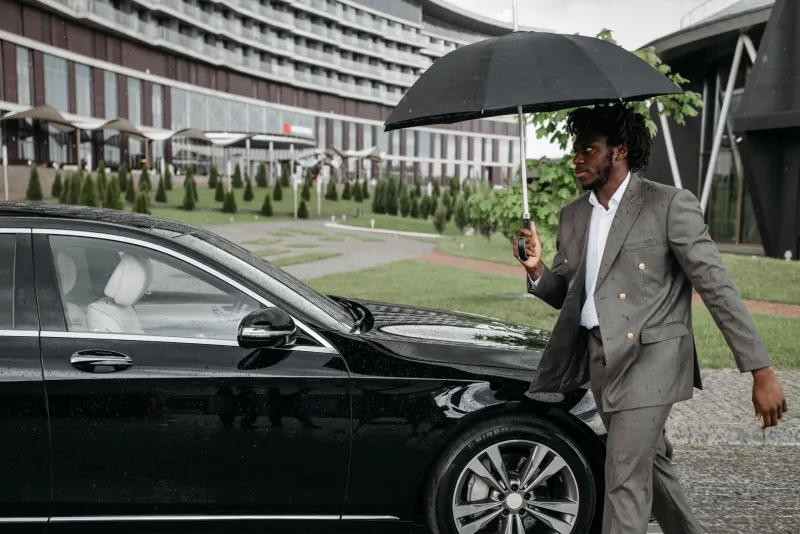
There is a moment — brief, almost imperceptible — that occurs before every consequential meeting. It happens not in the conference room, not during introductions, and not over the first exchange of business cards. It happens outside, on the street, in the parking garage, or at the building's entrance, when the people you are about to do business with catch their first glimpse of how you arrived.
In that moment, a judgment is formed. And in most cases, you will never know it happened.
The Psychology of First Contact
Decades of social psychology research have established that human beings form lasting impressions within the first few seconds of encountering someone new. What is less commonly discussed is how far upstream that impression-formation actually begins. Studies on environmental cues and status signaling consistently show that the context surrounding a person — including the vehicle they arrive in, the manner of their entrance, and the level of composure they project — influences how observers assess competence, credibility, and authority.
For executives operating in high-stakes environments, this is not an abstract concern. It is a practical reality with measurable consequences. Investors size up founders before the pitch deck appears on screen. Clients form opinions about a firm's standards before the account manager has ordered coffee. Negotiating counterparts read power dynamics in the room before a single term is placed on the table.
Your arrival is the opening move. Most executives leave it entirely to chance.
What Self-Driving Actually Signals
The instinct to drive oneself to an important meeting is understandable. It feels independent, efficient, and self-sufficient. But consider what the experience actually produces from the outside observer's perspective — and from your own.
Arriving in your personal vehicle means navigating unfamiliar streets, hunting for parking, managing payment, and covering the final hundred yards on foot while mentally recalibrating after the friction of urban driving. By the time you enter the room, you have absorbed a series of small stresses that, individually, seem trivial but collectively erode the composed, unhurried presence that high-level engagements demand.
More critically, the vehicle itself carries associations. A personal car — regardless of its make or model — reads as personal. It signals that the meeting, however important, did not merit a deliberate, curated approach to logistics. In environments where perception of success is currency, that signal has a cost.
The Choreography of a Professional Arrival
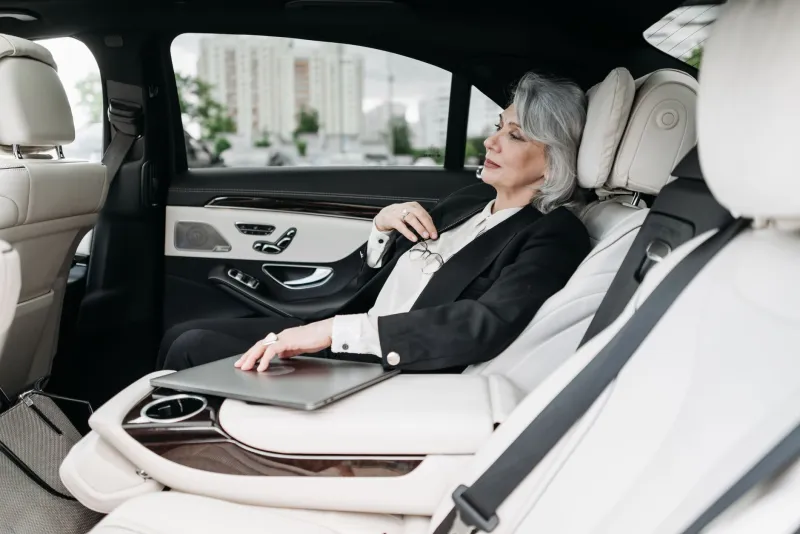
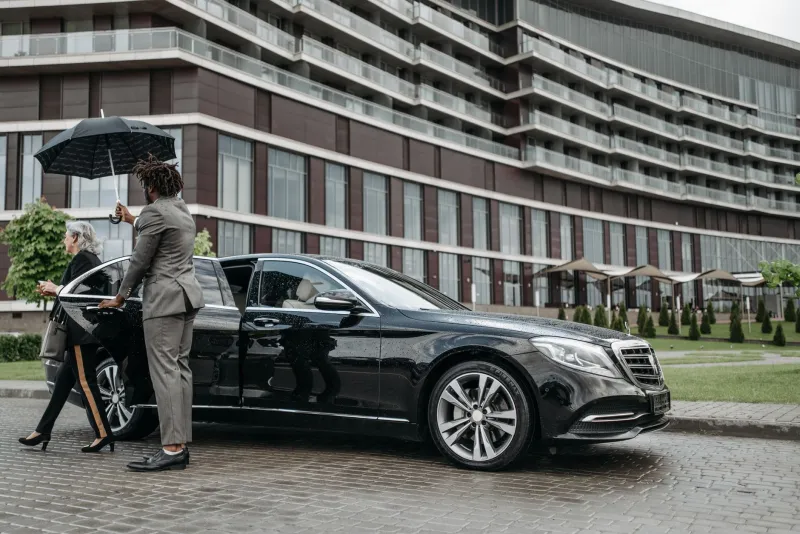
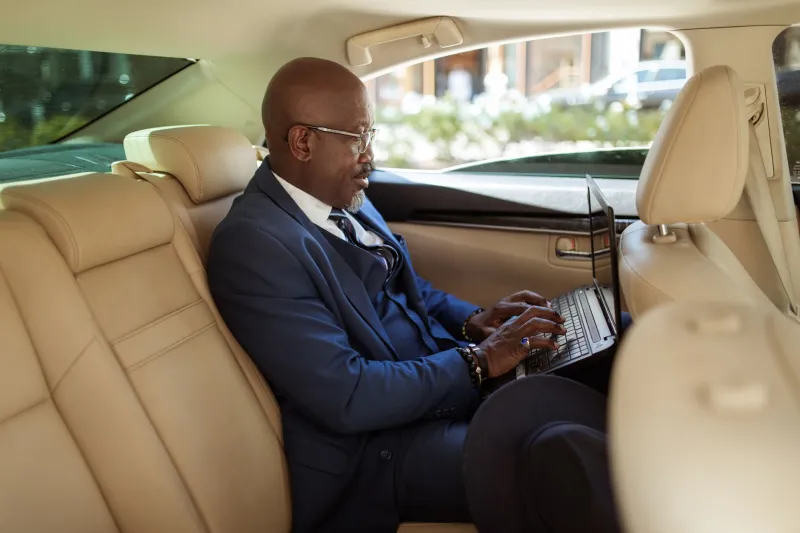
Contrast that experience with the arrival enabled by professional chauffeur service. The vehicle — immaculate, appropriate to the occasion, selected with intention — pulls to the curb precisely when it should. The door opens. You emerge unhurried, composed, and fully present, having used the transit time not to manage traffic but to review notes, prepare mentally, or simply arrive in a state of readiness.
To anyone observing from the building's entrance or lobby, the message is immediate and unambiguous: this is someone who manages their time and environment with precision. Someone who delegates the operational so they can focus on the strategic. Someone who treats this meeting as worthy of genuine preparation.
That impression does not require explanation or reinforcement. It is absorbed automatically, before the meeting has technically begun.
Ground Transportation as Professional Brand Architecture
The most sophisticated executives understand that personal branding is not limited to LinkedIn profiles and speaking engagements. It extends to every touchpoint through which others experience your professional presence — and few touchpoints are as immediate or as visceral as physical arrival.
Luxury ground transportation, deployed consistently and thoughtfully, becomes part of the architecture of your professional identity. It communicates that you operate at a certain altitude. It signals that the details of your professional life are managed with the same rigor you apply to the work itself. And it establishes, from the very first moment of contact, that the engagement you are about to enter is one you take seriously.
For client-facing executives, this consistency compounds over time. A client who has seen you arrive in a professional chauffeur vehicle across multiple engagements has received, repeatedly, a non-verbal message about your standards. That message becomes part of how they characterize you to colleagues, partners, and boards.
Investor Confidence and the Theater of Competence
In venture and private equity contexts, the dynamics are even more acute. Founders and executives seeking capital are, in a very real sense, auditioning for trust. Investors are not only evaluating the business proposition — they are evaluating the person making it. Can this individual execute under pressure? Do they project the kind of controlled authority that will inspire confidence in employees, partners, and future investors?
The manner of arrival contributes to that evaluation in ways that are rarely articulated but consistently felt. Arriving via professional chauffeur in a well-appointed vehicle does not guarantee a term sheet. But arriving flustered, slightly late, and distracted by the parking situation you just navigated certainly does not help.
The theater of competence is not deception. It is the deliberate alignment of your external presentation with the internal capabilities you actually possess. If you are serious about what you do, your arrival should reflect that seriousness.
The Negotiating Table Begins at the Curb
Negotiation theory has long recognized the importance of perceived power in shaping outcomes. Parties who project confidence, preparation, and ease tend to anchor discussions more favorably, hold their positions more effectively, and exit with better terms. The factors that contribute to that projection of power are numerous — but they begin accumulating before you take your seat.
When you arrive composed, on time, and via a mode of transportation that signals intentionality, you enter the room already ahead. You have not surrendered any psychological ground to the friction of a difficult commute. You have not given your counterpart an early read of disorganization or unpreparedness. You have, in effect, already begun negotiating — and you have done so favorably.
Arriving With Intention
The executives who understand this dynamic do not think of ground transportation as a logistical afterthought. They treat it as a strategic input — one component of a larger, deliberately constructed professional presentation.
At CapStar Chauffeurs, this is precisely the philosophy that guides every engagement. Our clients are not simply transported from one address to another. They are delivered — composed, prepared, and positioned to make the strongest possible impression from the moment they arrive.
Because the silent interview is already underway. The only question is whether you are ready for it.