What the Drive to the Airport Is Actually Costing You: A Financial Case for Executive Ground Transportation
There is a particular kind of executive who takes pride in handling things personally. They book their own flights, carry their own bags through security, and drive themselves to the airport in a car they spent considerable time selecting. To them, this independence signals competence. What it actually signals, when examined against the ledger of time, productivity, and cognitive performance, is an expensive habit masquerading as self-sufficiency.
The true cost of driving yourself to the airport is not what you pay for parking. It is everything else.
The Arithmetic of Lost Time
Consider a realistic airport run in any major American business hub—Dallas, Chicago, Atlanta, or Los Angeles. A senior executive departing for a morning flight on a weekday must account for the drive itself, the search for parking, the shuttle to the terminal, check-in, security, and the buffer time built in to absorb any of those variables going wrong. On average, that sequence consumes between 90 minutes and two and a half hours of the executive's morning, depending on the airport and traffic conditions.
Now apply a straightforward calculation. If that executive's time is valued at $500 per hour—a conservative estimate for a C-suite professional at a mid-market company—then two hours of transit represents $1,000 in opportunity cost. That figure does not account for the parking fee, which at major airports typically runs between $30 and $60 per day, nor the fuel, wear on the vehicle, or the administrative burden of expense reconciliation afterward.
For an executive who travels twice per month, the annual opportunity cost of self-driving to the airport exceeds $24,000. That number, presented clearly, tends to reframe the conversation about whether a professional chauffeur service is a luxury or a sound operational decision.
The Productivity Drain That Begins Before Takeoff
Time lost is only part of the equation. Equally significant—and far less frequently discussed—is what the drive to the airport does to an executive's cognitive state before they even board the plane.
Research on decision fatigue and stress-induced cognitive impairment is well established. Navigating traffic, monitoring GPS directions, managing parking logistics, and absorbing the low-grade anxiety of potentially missing a flight all draw from the same reservoir of mental energy that executives rely upon for complex reasoning, negotiation, and strategic thinking. By the time a self-driving executive reaches their gate, they have already spent a measurable portion of their peak cognitive capacity on tasks that produce no business value whatsoever.
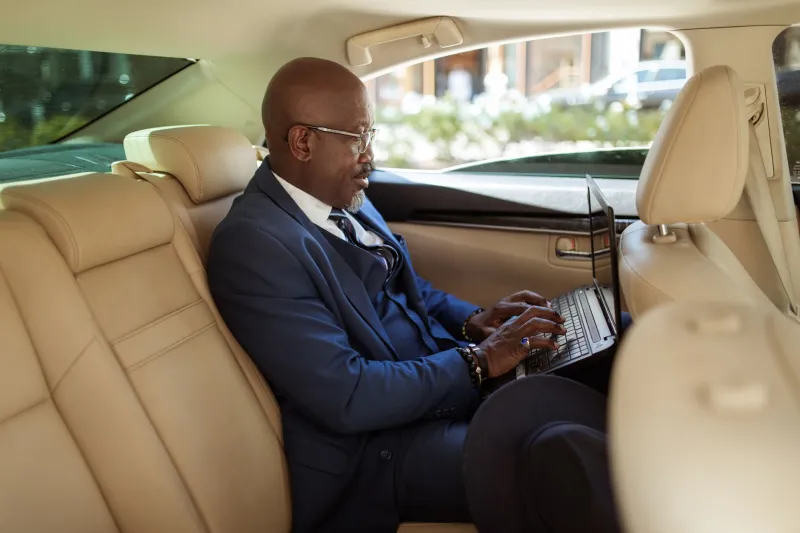
Contrast that with the executive who steps into a professionally appointed vehicle, hands the logistics entirely to a trained chauffeur, and spends that same 90 minutes reviewing briefing materials, preparing for a board presentation, or making calls that advance active deals. The difference in mental readiness upon arrival is not trivial. In high-stakes business environments, where the margin between a closed deal and a stalled negotiation can hinge on a single sharp exchange, arriving mentally fresh is a competitive advantage with a measurable dollar value.
The Compounding Effect on Deal-Making Performance
Senior leaders at major American corporations have increasingly begun treating pre-travel ground transportation the way they treat pre-meeting preparation: as an input that directly affects output quality. This is not an abstract philosophy. It reflects a practical understanding of how human performance works under conditions of sustained pressure and travel demand.
An executive who travels three times per week and self-drives to the airport each time is absorbing roughly six to eight hours of avoidable stress and logistical friction every seven days. Over the course of a quarter, that accumulates into a chronic low-level impairment that affects sleep quality, interpersonal patience, and the kind of clear-headed judgment that defines effective leadership. The downstream effects on deal-making, team management, and client relationships are difficult to quantify precisely but are well recognized by executives who have made the transition to professional ground transportation and noticed the difference.
Parking Costs Are the Visible Tip of a Much Larger Iceberg
Most executives who resist outsourcing their airport transportation do so because they are comparing the visible cost of a chauffeur service against the visible cost of parking. This is a fundamentally flawed comparison.
Long-term airport parking at O'Hare International averages $22 per day. At LAX, economy parking runs $35 per day. At Hartsfield-Jackson in Atlanta, covered parking approaches $40 per day. These are real expenses, and they are the ones that appear on an expense report. What does not appear on that report is the value of the two hours of billable or strategic time consumed by the transit, the cognitive cost of arriving at a client meeting depleted rather than focused, or the reputational impression created by arriving in a personal vehicle rather than a professionally managed car.
When the full cost structure is presented transparently, the economics of professional ground transportation become difficult to argue against. A premium chauffeur service in most major US markets runs between $150 and $350 for an airport transfer, depending on vehicle class and distance. Against the combined opportunity cost of time, cognitive performance, and parking fees, that figure is not an expense. It is a margin-positive investment.
How the C-Suite Has Already Solved This Problem
The executives who occupy the corner offices of Fortune 500 companies largely resolved this question years ago. Ground transportation for senior leadership is treated as a standard operational line item in their travel budgets—not because companies enjoy spending money, but because the math is unambiguous and the performance implications are real.
What is changing is the tier of executive making this calculation. Directors, vice presidents, and senior managers who travel frequently are increasingly recognizing that the productivity case for professional ground transportation applies to them as well. The threshold is not corporate rank. It is the value of the time being consumed and the quality of the work being done during transit.
For any professional whose time is worth more than $150 per hour and who travels by air more than twice per month, the financial case for outsourcing ground transportation is essentially settled. The remaining question is simply one of choosing a service capable of delivering the reliability, discretion, and quality of vehicle that the arrangement demands.
The Standard That Travel Should Meet
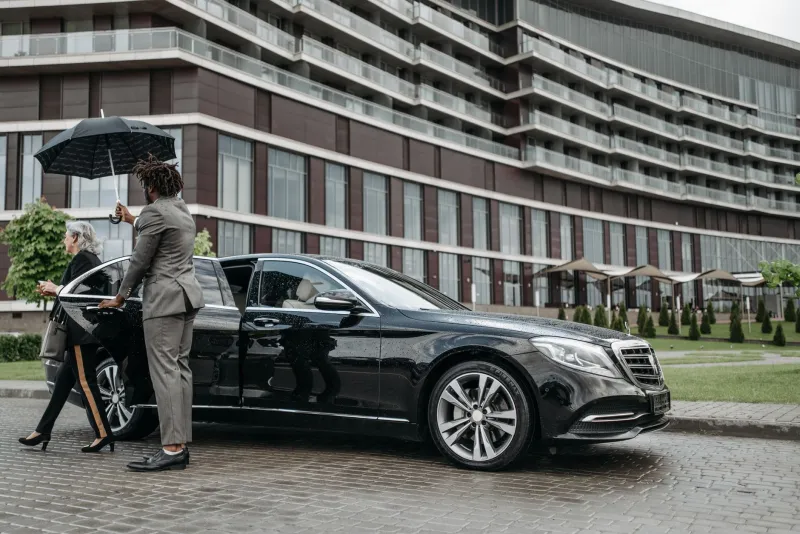
At CapStar Chauffeurs, the position is straightforward: ground transportation should never be the reason an executive arrives at a meeting anything less than composed, prepared, and on time. The vehicle, the driver, the routing, the timing—all of it should be handled with the same professional precision that defines how elite organizations operate in every other dimension.
The executives who treat the drive to the airport as an afterthought are the same ones who occasionally arrive flustered, distracted, and a step behind. Those who treat it as a strategic input arrive differently—and in business, how you arrive is never incidental to what happens next.