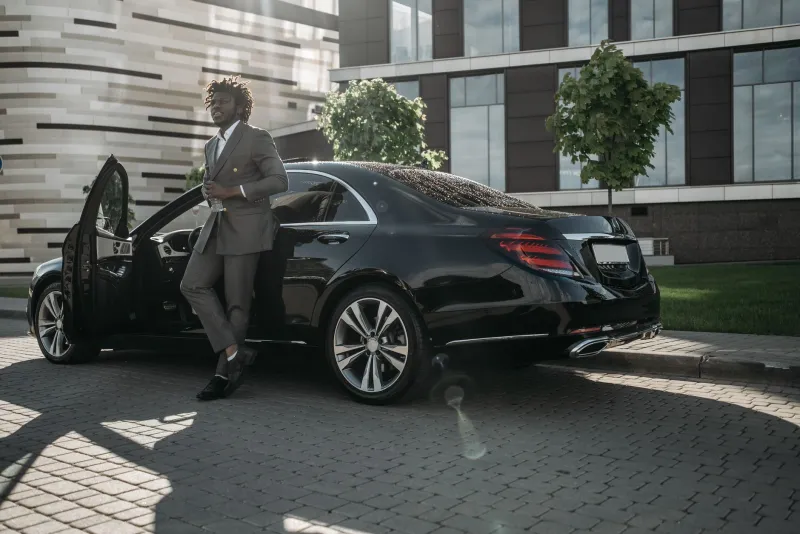
What the Car Outside Says About the Company Within: Ground Transportation as Corporate Mirror

There is a particular moment that seasoned executives recognize instinctively: the instant a prospective partner, recruit, or investor steps into—or merely observes—the vehicle arranged on their behalf. No pitch deck accompanies it. No prepared remarks soften it. It is an unmediated data point, and discerning professionals read it with precision.
Ground transportation, long treated as a logistical afterthought, has quietly evolved into one of the most revealing artifacts of corporate culture. The choices a company makes—vehicle class, driver professionalism, punctuality standards, booking protocols—compose an operational self-portrait that external observers and internal employees alike study more carefully than most organizations realize.
The Unwritten Policy That Everyone Reads
Every company has a formal travel policy. Far fewer have examined what that policy actually communicates.
Consider two scenarios, both involving a senior candidate flown in from Chicago to interview for a VP-level role at a mid-sized financial services firm in Dallas. In the first, the candidate lands at DFW to find a distracted driver holding a misspelled sign near baggage claim, a mid-tier sedan with a cracked interior panel, and a route that adds twenty minutes due to poor planning. In the second, a professionally attired chauffeur meets the candidate at the gate, the vehicle is immaculate, the climate is already adjusted, and the ride unfolds in composed, unhurried silence.
Both candidates arrive at the same building. Neither experience, however, delivers the same message.
The first signals organizational indifference—a company that either cannot identify details that matter or has decided this particular detail does not. The second signals intentionality: a culture that extends care to the granular, that treats a candidate's comfort as a legitimate operational priority. Before a single interview question is posed, a judgment has been formed.
Talent Retention and the Logistics of Respect
Human resources professionals have long understood that employee experience extends far beyond compensation packages and office perks. The texture of daily professional life—how supported, valued, and considered employees feel in practical terms—shapes retention in ways that surveys rarely capture cleanly.
Ground transportation sits squarely within this texture. When a company dispatches a road-worn vehicle driven by a contractor who does not know the executive's name or destination, the implicit message is one of transactional indifference. When that same company invests in a trained, briefed chauffeur operating a premium vehicle, the message shifts to one of institutional regard.
This distinction resonates with particular force among senior talent. Executives who have earned their positions through years of demanding work carry a calibrated sense of professional self-worth. They notice—and remember—when an organization demonstrates that their time and comfort occupy a place of genuine priority. They notice equally when those things are treated as negotiable.
In competitive talent markets, where the difference between accepting and declining an offer frequently comes down to intangible signals about cultural fit and organizational character, these moments carry disproportionate weight.
The Boardroom Begins at the Curb
Negotiations are shaped by far more than the terms on the table. Atmosphere, confidence, and perceived leverage all influence outcomes in ways that rarely appear in post-mortem analyses. Ground transportation, operating in the hours before high-stakes conversations begin, contributes to each of these variables.
A delegation that arrives composed, unhurried, and insulated from the friction of transit enters the room with a measurable psychological advantage. The vehicle that delivered them—and the organization that arranged it—has already made a statement about operational competence and respect for the occasion.
Conversely, a counterpart who has spent the preceding hour navigating an unreliable car service, fielding calls about a delayed pickup, or managing the ambient stress of uncertain logistics arrives depleted. The negotiating environment has already been tilted before anyone takes a seat.
Savvy organizations understand this dynamic and arrange ground transportation not merely as a convenience but as a deliberate component of their strategic preparation.
Fleet Selection as Organizational Philosophy
The specific vehicles a company chooses for executive transportation encode a set of values that employees, clients, and partners decode—often unconsciously—with remarkable accuracy.
A company that selects premium sedans and SUVs maintained to exacting standards communicates that it holds itself to high operational benchmarks across the board. A company that defaults to whatever is cheapest and most immediately available communicates a different hierarchy of priorities. Neither is invisible. Both are legible.
This extends beyond aesthetics. Fleet condition speaks to vendor relationships and contract rigor. Driver training protocols speak to investment in human capital. Booking systems and communication standards speak to technological sophistication and client-service orientation. Ground transportation, examined closely, is a microcosm of how an organization operates everywhere else.
The Internal Signal Organizations Overlook
Much of the conversation around executive transportation focuses on external perception—what clients, candidates, and partners observe. Equally significant, and less frequently examined, is what internal stakeholders absorb from these decisions.
When a company provides consistent, high-quality ground transportation for its senior leadership, it reinforces a culture of excellence and organizational pride. Employees who witness their company's commitment to professional standards—even in domains as seemingly peripheral as how executives are transported—internalize those standards as representative of who the company is.
When those standards are absent or inconsistent, the signal runs in the opposite direction. A culture that tolerates mediocrity in the visible, manageable details of executive logistics is a culture that employees reasonably suspect tolerates mediocrity elsewhere. That suspicion, once seeded, is difficult to dislodge.
Raising the Standard Across the Organization
The practical implication of all this is straightforward, even if its execution requires deliberate attention: ground transportation decisions deserve to be made with the same strategic care applied to any other element of corporate presentation.
This means selecting providers on the basis of demonstrated professionalism, not merely price. It means establishing driver conduct and vehicle standards that reflect the company's broader service philosophy. It means treating the experience of being transported—whether for a client, a candidate, or a senior executive—as an extension of the brand.
For organizations that have not yet examined their ground transportation through this lens, the exercise is illuminating. Pull back the curtain on current practices and ask, with honest eyes, what story they tell. The answer frequently reveals more about organizational culture than any internal survey or values statement ever could.
At CapStar Chauffeurs, we have spent years working with companies that understand this dynamic and have chosen to let their ground transportation speak well on their behalf. The companies that get this right are, in our experience, the ones that tend to get most other things right as well. That correlation is not coincidental. It is the natural consequence of a culture that pays attention—to detail, to people, and to the enduring power of first impressions.